Showing posts with label Johns. Show all posts

Thursday, June 23, 2011

Johns Eve, June 23, 2011

Johns grasses


The Latvian politologues, a term suggesting political expertise, but in fact being a term applied by hosts of news shows to anyone he-she pleases to so elevate. Judging from the stuff that Latvian politologues say and opine, most of them have some education in the art of politics. However, none of them has heard (at least not in Latvia) of the word “populism” as a term that plays a significant role in the politics of just about every country but Latvia.

This matter of the “populists” and “populism” being a word beyond ken is another matter that causes Latvia to distinguish itself as an exception among nations.

If the government in North Korea is sometimes thought of in terms of being brutish and nasty, and those damn landlocked Afghanistan’s are unbeatable because of their populist notions of themselves, and add those commie populists who brought on the Soviet Revolution, and the poor and unemployed Germans following the First World War with their load of reparations to pay, and one soon comes to the Latvian notion that the word “populist” is not mentionable as having any sense of meaning, except contemptible.

Such notions concerning Populism pervade the Latvian establishment from the President down to every talking head on television. Apparently no Latvian politician when engaged in protecting his moral image through self-gratification can see in his dreams any other woman than a breasty half naked Dame Liberty with raised sword leading the rabble into battle against “talking heads” of Latvia. Populism is, in short, an unmentionable mentionable, a synonym for protecting the existing political system from politics.

Little Jane

As I suggested in several preceding blogs, the Latvian President-Elect ought to refuse to accept his election as the next President of Latvia by parliamentary Saeima (a Senate sort of), which the incumbent President (in office until July 7) has suggested be dismissed (for any number of anti-State acts) through a public Referendum to be held on July 23.

I have also suggested that such a refusal by the President Elect is desirable, because it is likely to have the effects of a religious revival, i.e., it will bring Latvians another step closer to the re-founding of their nation. I stated that in spite of the legitimacy of Latvia as a state, there are certain questions that refuse to go away. One of these questions (because it is being treated as if there can be no such question) is why the Latvian government—ever since the declaration of Latvia as a State in 1918—has tilted center-right?
Making the Johns crown (vainags)

What is so right about center-right and so wrong with Populism?

There is a bevy of scholars, writers and teachers, whose contributions to political theory challenge the one sidedness of Latvian politologues and politicians. Here is a quote from Chantal Mouffe, a professor at University of Westminster: “The legitimacy of modern liberal democracy is grounded on the idea of popular sovereignty, and those who believe that it can be discarded are profoundly mistaken.” http://www.cccb.org/rcs_gene/mouffe.pdf

Apparently, Latvian politicians, politologues, and the media believe that “populism” is a word that can be discarded. A Latvian right center government has constituted the government of Latvia all the years of Latvian independence, except of course during the time Latvia was occupied by the Soviet Union. Moreover, the center-right—given that it has a mindset perpetually locked onto an Earth created in its image, re monopolar or a half a ball makes a ball—will always raise the question: “Hey, what about those popular sovereigns, err, those populists?”

In spite of questions, for most of Latvian politicos and ruling classes Populism remains something of a synonym for shit (sūds), which is why one may not hope that the President Elect Andris Berzins will voluntarily surrender his crown (bestowed on him by what the Populists call “oligarchs” and a partidocratic Saeima) of the Latvian presidency.

One of my unkind comments about Latvian oligarchs is that “oligarchs screw oligarchs”. Of course, oligarchs, i.e.—the system of liberal democracies in which individual rights have been secured by corporations—will likely prevail and maintain the democratic deficit in Latvia as it has for all these years. After all, it is private property over popular sovereignty, halleluiah!

In short, why should the President Elect not stick with the screws of the ship of state turning the ship in a perpetual center-right circle? Was the wheel not turned center-right from day one? Moreover, who can prove that the soft coup d’etad of “53+” was indeed a coup? It is unlikely that it can be proven in a juridical sense.
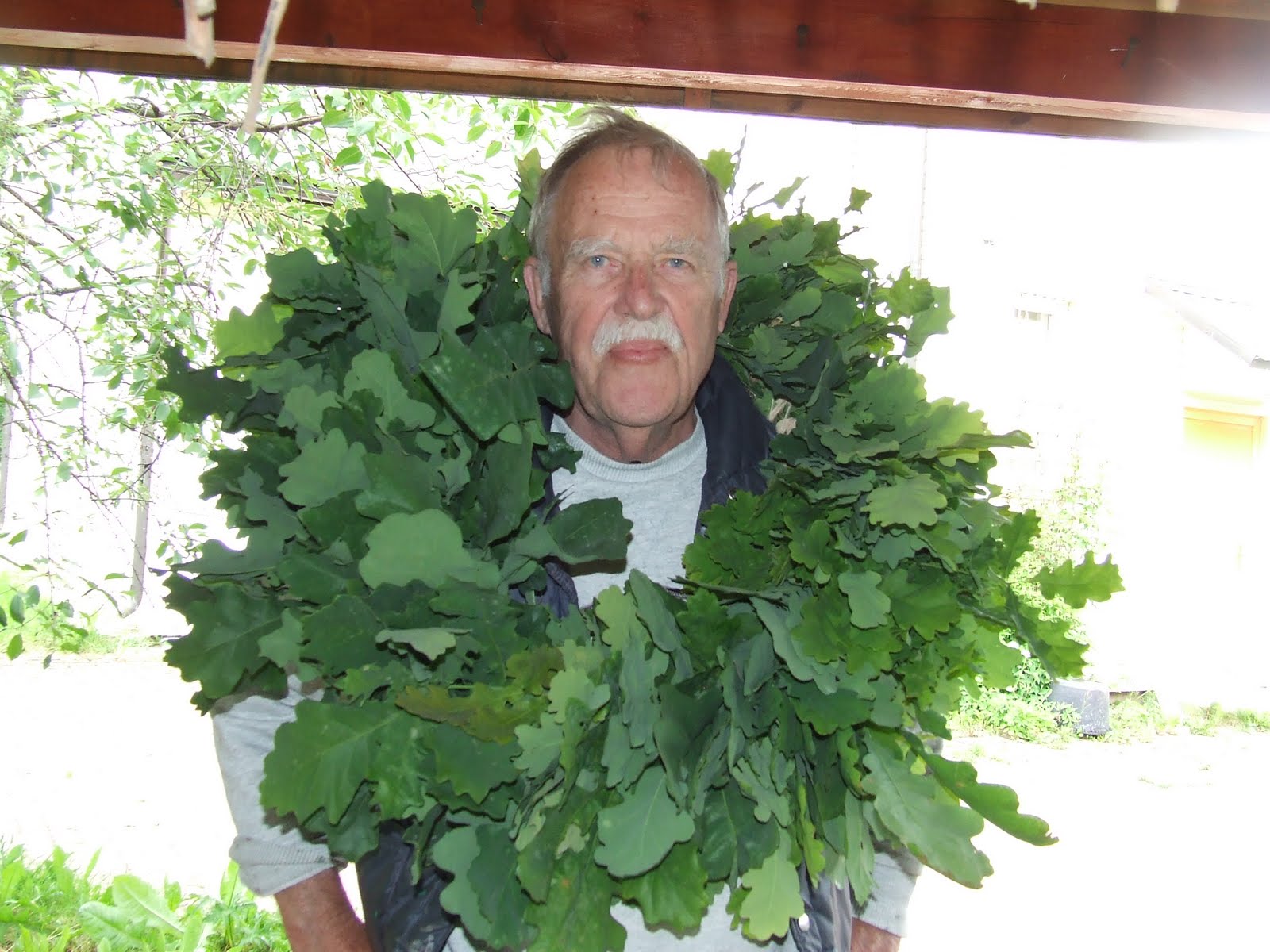
A son of Johns

However, the history of liberal democracy in Latvia tells a different story. Indeed, one may draw a parallel between de facto http://en.wikipedia.org/wiki/De_facto segregation in America after the Civil War (1861-1865) with regard to black people, which war allegedly freed them from slavery, but, alas, only in a de jure sense. Racial segregation in the United States de facto ended only a century later.

One has only to listen to the anti-populist, anti-popular sovereignty statements from Latvian government officials and the news media to know that the Latvian people constitute a segregated element, the Latvian democratic deficit.

Sunday, May 29, 2011

Kāpēc Latvijā ir nepieciešama populisma atplauksme
Why Latvia Needs a Revival of Populism
Eso Antons Benjamiņš aka Jaņdžs

Populists on the rise


The Latvian President’s speech last evening calling for the dismissal of the Latvian Saeima,  http://www.delfi.lv/news/national/politics/zatlers-nolemj-rosinat-saeimas-atlaisanu.d?id=38755691 , a constitutionally sanctioned conclave of elected officials (deputies) who for twenty years have denied democracy a populist base, is a major step in an attempt to rescue Latvia from business interests turning the state into their private fiefdom.

At this time (judging from the public’s overall response on a number of internet forums) the President’s move has met with undisguised and enthusiastic approval. It remains to be seen how this approval translates itself in the coming weeks and months in public debate and actions.

As this blogger has often pointed out, the cause of the crisis in Latvian government—past and current—has a number of sources. It has roots, both, in the distant and near past.
Populist activist for President

A major cause that has been inherited from the distant past and disgruntles the “inner” citizen in us is the loss of the spiritual inheritance (call it religion), traceable to the dissolution of proto-Latvian arch-Christian roots in the 11th to 13th centuries. The Crusade by neo-Christians (so-called Catholics at the time) against the kingdom of Jersika in 1209 serves as an early nodal point for Latvians as a people of whose rooms we still have the smell in our noses.

Coinciding with the crusade against the Cathars in Languedoc (France), the crusade against Jersika repressed the proto-Latvian branch of a nigh universal religious orientation. Its basis was all forms of sacrifice designed to create and hold a community. Self-sacrifice played a major role in our societies’ creation, because it is an essential to it.

Unfortunately, while both arch- and neo-Christianity share in a message of love and non-violence, neo-Christianity used and continues to use the support of secular princes. These then used overwhelming violence against the Children of Johns and their leadership (Johns) in order to replace the people who constituted the proto-Latvians or Children of Johns activism with people who accepted their entombment (for all that an embodiment) among the so-called pa-gans.

While modern scholarship has a number of theories whence the name ‘pagan’, it most likely derives from the time when Latvia (and other parts of Europe) was deforested, and the forest dwellers were turned into pa-yans, re, lesser Johns, in due course to become ‘pagans’.

The demoralization of the Johns, their repression, and therewith transformation into payans (peasants), gradually reduced the Children of Johns (Jāņubērni) to serfdom and de facto slavery.
First ever photograph of a Populist Presidential candidate on a caroussel over Riga
The ‘religion’ of Johns and their children, embedded in the endearing word of the Latvian language, has by today been reduced to a version of pseudo Latvian. The latter is the language of government, media, all ‘public’ life turned against the ‘privateness’ of Latvians living as an intimate and more or less homogeneous community. This separation of public and private has caused great havoc in the Latvian community by creating a perpetual ‘them’ as government and ‘us’, the invisible, the private, the ‘legally’ disemboweled people. “They” make all the laws, including such that serve them only, while “we” lose our former rights to use the word as lawmakers. Not surprisingly, “we” became apathetic.

As a result of President Zatler’s call for the dismissal of the Saeima, we—the ‘us’ of ‘them’—now are in the turbulent regions of what Freud called “the internal foreign territory”. The government (successive governments including) that has long violated the internal foreign territory of the “inner” Latvian, even to the extent of driving him-her unconscious of him-herself, is, suddenly, challenged by one as if of itself, the President.
Another Populist candidate cips into the picture

There is no guarantee that the President’s move to dismiss the Saeima will in and of itself awaken the populist in Latvians. However, it necessarily creates the opportunity for the awakening of not only outrage at the surface of the deeps, but reach levels of repressed memories where the homogeneous community dwells.


What will the homogeneous Latvian community of tomorrow look like?

We cannot discount the possibility that Latvia is the very soil where the lowly worm raises his head and becomes the King of Snakes by remaining a lowly worm. A major revolution in Latvian self-consciousness would do great wonders to revive a chicken plucked bare in Latvia and the world over. Here’s one for the feathered one.

(to be continued…)
 

Friday, December 3, 2010

Full or partial entries of my blogs may be found at LatviansOnline http://latviansonline.com/forum/ + Forum Home + Open Forum – The 4th Awakening. If you copy this blog for your files, or copy to forward, or otherwise mention its content, please credit the author http://esoschronicles.blogspot.com/, http://melnaysjanis.blogspot.com/, http://the-not-voter.blogspot.com/ or http://the4thawakening.blogspot.com/

I suggest you look at the links imbedded in these blogs or at the end of the blog as an integral part of my argument.
The 4th Awakening
17 All Seven Brides Lose Their Heads

The proto-Latvian story tellers were good at presenting to their audiences dantesque images of hell. It got everyone’s attention. This was because they understood that desire is not a force that is engendered by hormones, but the result of imitation, mimicking. Thus, if you were one of the kind to steal from poor people, when it came time for you to go to the other world (“viņu sauli”, the other sun), you were allowed there to smelt silver to your heart’s content, but to get it out of the smelter, you had to take it in your mouth while it was still hot.

[These and other stories available by searching “Cels uz vinu sauli” or clicking here.]

The Theatre of Hell is, in short, a minimalist affair: the visitor gets to see hundreds if not thousands of “the dead” repeating the same act over and over again. The quick image/act is meant to convey a moral, but the moral is up to the story teller to create. Therefore, some morals may remain with the audience for much longer than others. As for the story teller, he is likely to be one of the wandering Johns of Arch-Christian Europe.

This linking of Johns with story telling is not as far fetched as some may think, because the hero in most of these fairytales is called Jahnis-John. On Johns Day every head of the household (saimnieks) is called John in Latvia. As suggested in an earlier blog, John very likely was the name of the divinity (God? Devil?) one might meet when traveling the countryside pathways in former times.

Let us return to the image of taking hot silver in one’s mouth. The way I first saw it in my mind’s eye, it gave unpleasant feelings. Computer art can make the event appear even more graphic and gruesome, bloody, and gory. Yet one may also see it interpreted differently. Why not have the greedy person’s mouth fill with silver every time he-she takes a drink of water? Then, when he-she spits the water out, it drops to the ground as silver for the poor to pick up. In short, the thief is condemned to repeat his thieving, but the thief-actor becomes, paradoxically, a slave to the poor.

An even more curious image is that of people climbing a ladder to reach the branch of a tree from which there hang numerous nooses. The people stick their necks into the noose, hang themselves, fall to the ground, and soon rise to repeat the act all over again. They do this endlessly. When Clever John passed by, one of the hanged asked him to ask the Sun (he knew that John was planning to climb Sun Mountain) for how long he and everyone else would have to keep up the act.

Clever John asked: “Why are you hanging yourselves?” The answer was as surprising as mysterious: “We are not hanging ourselves. We are being hung by our oppressor.”

What does being “hung by our oppressor” mean in a world where—like our own—everything is positively Positive?

Most people know the answer, but as soon as they hear it, they seem to want to forget about it--until, next year, when they inexplicably tell the story again.

To be hung by one’s oppressor fits well with what we today call suffering from Post Traumatic Stress Disorder. Of course, in most cases, the word “traumatic” is newspeak for “combat violence”. Someone is stressed over having seen guts lying in the street and knowing that it is the result of something that same someone has done. No, of course, we deny we did it. We did not do it of our own will, but we were sent as soldiers to do it. We were taught to obey “direct orders” and kill. And we killed—often women, children, and pregnant women, and men—because they looked at us (we are told) with “terrorist’” eyes. After the image drifts through our mind a thousand times, we hang ourselves. Many turn to alcohol and neglect their children. PTSD is no laughing matter.

This is the PTSD story that John the story teller, who is his own mimic, would have told us. The image, the more real it is, the more unforgettable and the greater its charisma. [My countryside neighbor has given up slaughtering pigs (cūku bēres), but only assists now, because “I used to do it, but I can no longer do the murder. My hands tremble too much.”] We may include among the more images the image of Sadam Hussein’s hanging. Note how the hangmen make sure that Hussein is told of every step in the procedure. It makes the scene memorable even to a couch potato before his-her television set, and when his-her turn comes, it will seem like deja vu. Yes, they will have a sense of having done it before.

Now let us imagine this repetition of images in the context of mimesis. Those who are condemned to hanging themselves over and over are under “direct orders” (in our name) to do violence, which they personally cannot tolerate. While we are at it, let us not be in  doubt that these witnesses to their own hanging are so shocked by it that they never in eternity forget it, never mind that their neighbors have come to watch it done in their name. The act imprints itself on a hologramatic mind plasma, where it is endowed with a charisma that can never be lost. It is an extraordinarily lucid and hypnotizing experience.

After the soldier--today or long ago--is done with his tour of duty, he is told to forget it (all that gory stuff) and go home. [The countryside pig slaughterer downs 100 grams of vodka as an intrinsic part of the Latvian pig slaughter ritual (cūku bēres). In former days, the slaughterer (butcher is for the man behind the supermarket steel door over a well lit butcher table) stayed around to see the pig’s liver baked and partake of its eating. Today, where I live, they take the vodka, do the job, receive Ls 10, and go home.]

No soldier or survivor of war, or refugee from war will ever forget their hanging, i.e., their violation. Their inner rage over the “direct order” (whoever gave it) and their having to carry it out has numerous ways to express itself. One reaction is to give a “direct order” that counters the “direct order” issued first. The answer is the bill due: they all go hang themselves all over again.

Someone must break the bad spell of revenge: the vendetta against one’s Self.

Help comes by way of John, or Clever John, or Jesus (who was a John), or some person of that kind. All Johns teach the innocents, the forest people, the art of how to stop torturing and being violent against other innocents. In the link (above) to the proto-Latvian “other Sun”, John comes and breaks the spell by simply telling those hanging in the nooses that the act will stop as soon as he claps hands or says the magic word.

In the stories that are related to the story below, the moment when John crosses the river as he returns from the “other side”, the countryside just minutes before littered with corpses, turns into a sunshiny day with death nowhere visible except as bark on a tree.*

Happy days are here again! Therefore, this is where we return to
The Story of Crazy Jane and Clever John (© Eso Anton Benjamins).

With arms around each other’s waists, Clever John and Crazy Jane leave The Old Witch's Inn and go climb Sun Mountain to watch Mother Sun rise on her birthday.

The Sun came up smiling, but soon became rattled. Green, red, yellow, and blue danced over the Sun’s face and shook the sky above her as if it were jelly. She had seen something unusual and unexpected. What’s that? Are those my daughters lying there on the barroom tables? Who are those guys sleeping on the floor? They look like bum bears to me, not men.

“Hi, Mother,” said Crazy Jane. “Me and Clever John climbed up to give you a real proto-Latvian birthday greeting.”

“Yes, that’s nice, thanks,” answered the Sun, “but I have never seen anything like this.” The Sun looked at the scene on the surface of the proto-Latvian country. “Not one of them stayed awake for me. I’ll speak to the witches about this. Something must be done.”

Clever John shielded himself from the Sun by hiding behind Crazy Jane. At which point Crazy Jane began to sing the proto-Latvian national anthem.

“Saulīt, svētī Latviju, mūs dārgo dzimteni, …”
[Dear Sun, bless Latvia, our beloved birth place.]

The Sun again gave the young couple a nice smile, then leaned a little forward and whispered something into Crazy Jane’s ear.

 “In the name of All that Is, no!” shouted Crazy Jane.

“Yes,” answered the Sun. “It will be as I say. Off with their heads.”

Asterisks & Links of Interest

  • Changing Feature: How the meme of violence extends itself into a more intimate setting. The one-off children who have one or both parents working perform as actors. First the head fills with music. It is not Götterdämmerung, but something much crazier: it is urban gansta violence. They kill well, because a war zone is but a less constrained field than their urban neighborhood street is.
Beware! Warming up for worse violence. The theme: Everyman climbing the gallows over and over again.You are invited to join the TO LOOK AT VIOLENCE community! Watch what is happening around you.

Put this as a tail to your blog and join TO LOOK AT VIOLENCE http://www.youtube.com/watch?v=3y_5vxM8PYM, then do all you can to stop the imposition of charisma through violence. Successful resistance will not happen until talking to one’s self ceases. The address of origin is at  http://the4thawakening.blogspot.com/  Responder (1): You are up!

Wednesday, October 13, 2010


Full or partial entries of my blogs may be found at LatviansOnline http://latviansonline.com/forum/ + Forum Home + Open Forum – The 4th Awakening. If you copy this blog for your files, or copy to forward, or otherwise mention its content, please credit the author http://esoschronicles.blogspot.com/, http://melnaysjanis.blogspot.com/, http://the-not-voter.blogspot.com/ or http://the4thawakening.blogspot.com/

I suggest you look at the links imbedded in these blogs or at the end of the blog as an integral part of my argument.
The 4th Awakening LL

This new series of blogs by Eso Anton Benjamins, aka Jaņdžs, introduces itself with three redacted blogs from a previous series, re “The Not-Voter”. One of the theses underlying “The Not-Voter” is that it is better for a voter who does not know the history of his-her nation to cast an empty ballot (not-vote) than presume to vote. The republication of these blogs with additional material  as an “Introduction” is to give the reader a quick overview of what is—despite a deliberate avoidance of the subject by the media and politicians—unique about Latvia.

2 The Intimidation of the Latvian Self

In blog 1 of this series, this writer mentions how the history of the Latvians was not only compromised and changed into a fairy tale by the Germanic Lutheran Church (in cooperation with other orthodox Christian churches of course), but how as a result the psyche of the Latvian people was repressed and suffered from a delayed growth syndrome.
Specifically, the inhibition of the Latvian psyche exercised by militant orthodox Christendom appears to have seriously affected the interest of the people in their past, i.e., their origins and history. Once the proto-Latvian Children of Johns had been renamed pa-Jāņi [with an effect on the psyche approximately the same if today Latvians were to be called pa-Latvians (palatvieši)], there began a process of self-alienation. The process may end with a loss of history as well as long-term memory.
It is probably but a coincidence, but following the analysis of the word “pagan”, certain material on this writer’s reading list suggested that the origin for the name “Latvia”, is different from what has been heretofore advertised.
At the link (click Latvia) the origin of the name is explained as “Derived from the regional name Latgale, originally Lettigalli. the ‘Let-’ part associated with several Baltic hydronyms; possibly common origin with the Liet- part of neighbouring Lithuania (Lietuva…); the -gale part meaning "land" or "boundary land", of Baltic origin”.
However, further reading and an open mind suggests that “Latvia” may originate from the name of the domain of Letowic in Poland *. The suggestion offered itself after reading “The Herrnhuter Pietism in the Baltic” by Valdis Mežezers, published by The Christopher Publishing House (North Quincy, MA), 1975. The author, a Lutheran minister, translates into English a letter written (1585) by Antonio Possevino. Possevino was a legate of the Pope and an intermediary between the Russians, the Poles, and Swedes during the signing of the peace treaty to “The 25 Years’ War” with Russia, 1570-1595. The letter appears in “Latvian History” (in Latvian) by the Latvian historian A. Spekke. Re: “All clergy (who labour here) have learned… [the] original tongues of the Livonians; they are called Estonian (estonica) and Latvian (lotavica as the Poles pronounce).”
[The name bears further investigation as another village known as Latowicz and others are known to exist. Unsurprisingly (at least to this writer), the name appears as a last name for many a Jewish family. More about it at another time.]
A search of the works of Antonio Possevino, leads to his “Moscovia” (in Latin, published 1586). In the book Possevino refers to Latvians as “Lotauos” or “Lotauis”.
The name brings to the surface some interesting associations.
A name so spelled is unknown to Latvians, however, the pronunciation of the name rings close to the word “lutausis”, a colloquialism for a floppy eared rabbit. This is not to suggest that Latvians have been named after rabbit’s ears. However, every Latvian once wore a winter hat with sheep’s wool lining the inside of the cap proper and the ear flaps that it came equipped with. The flaps were let drop over the ears in winter to keep them from freezing. The Latvian word for ears is “auss”, which suggests that “lotauos” is a word constructed by two words, lot + auos. The origin of “lot” stands open to suggestion; however, the name for a rag is “lupata”; and the word for leaf is “lapa”, the latter objects which suggests themselves as a possible flap. The consonant P might slide sideways and become a T, as the name of Lapland might become Latland. or Lettland, or Latous. It is also possible that an H (as in hat, German “hut”) came to be pronounced as L, thus Hut = Lut = Lut + auos.
In short, might not the name for Latvians, a people who live in the northern eastern part of Europe, have originated from others seeing them wear wool caps with large ear flaps?
Also, do not these interpretations regarding the origin of the name of Latvia suggest that the obvious may not be obvious because the linkage of the words is not desirable?
In other words, “paYan” (discussed in the previous blog) and “Latauos” are words insufficiently sanitized, and thusly may cause associations among Latvians that some Latvians would rather they not think of. Surely “paYan” suggests a snear directed at something that at another time had dignity; and “Latauos” may seem not dignified enough to those who buy their “champignons” at the market rather than gather mushrooms in the forest for themselves?
Perhaps through such epistemological innocence, we can come to discover other secrets. For example, does not the accentuation of so-called Latvian folk designs and symbols—though no doubt tasteful decorations—actually repress a profound truth about Latvians?
What are the Latvian people going to say when it is discovered that their “pagan” history is no older than a hundred and fifty years, and that the Latauos were the Children of Johns and were Christians long before their Dear God (Dieviņš) was made over into a God’s God? Indeed, the Latvian Dievins was never found in the sky, but was always walking the roads of the world as the stranger you meet when you are out walking?

Asterisks & Links of Interest

* The link opens to “map”. Please type “Letowice, Poland” in the Search window to bring up the location of this village—east of Czechoslovakia and some eighty miles east of Krakow and ten west of Tarnow.
 Jaņdžs0 comments